For many Americans, bacon is an essential element of the perfect breakfast—not to mention a welcome addition to everything from cheeseburgers to doughnuts. But bacon hasn't always been beloved. Ancient Egyptians elites looked down on pork, Judaism and Islam banned it entirely, and in Shakespeare’s time, calling someone “bacon brains” was a serious insult. So how did we go from bacon shaming to today's full-on baconmania? We’re calling in the bacon experts to uncover how pigs domesticated themselves before becoming the key to world domination, what Sigmund Freud has to do with the ascendance of bacon and eggs as a breakfast staple, and why "bringing home the bacon" is the key to marital bliss. Listen in now for the salty story of humanity's on-again, off-again love affair with these streaky strips!
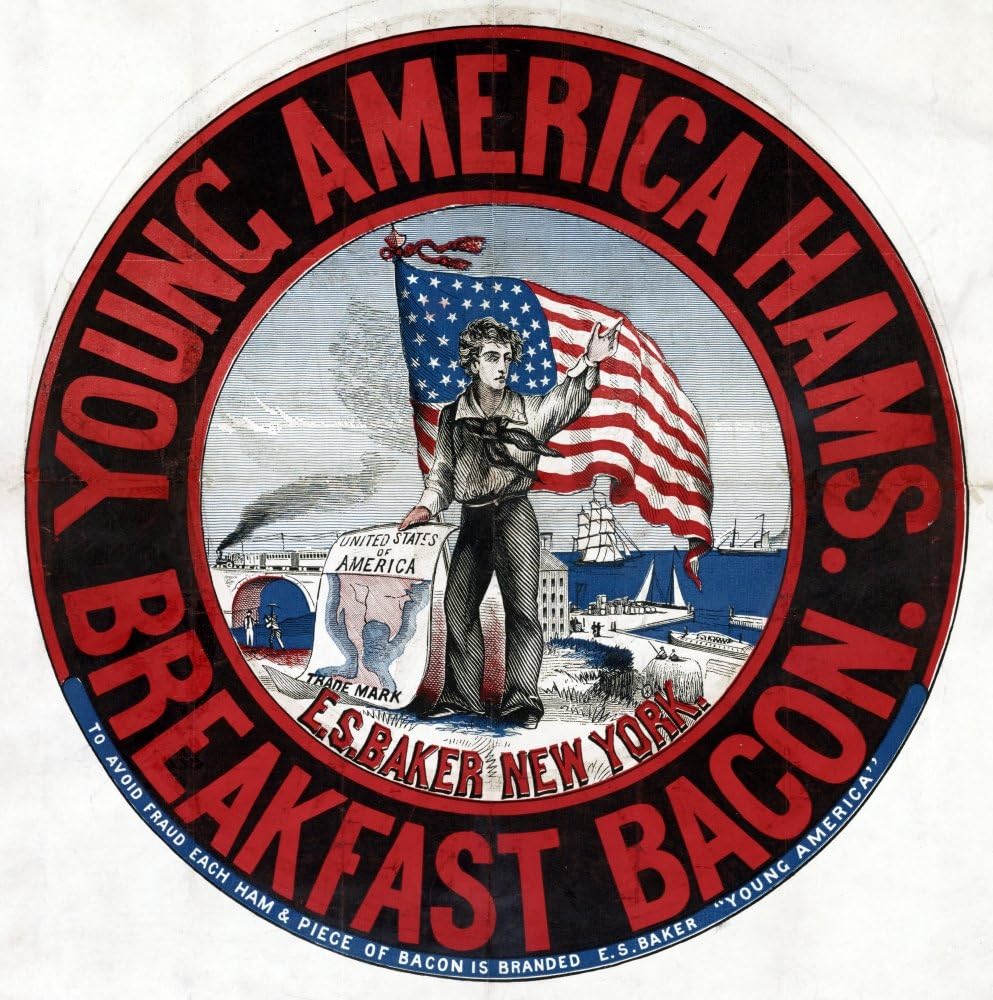
An advertisement for E.S. Baker bacon, circa 1865.
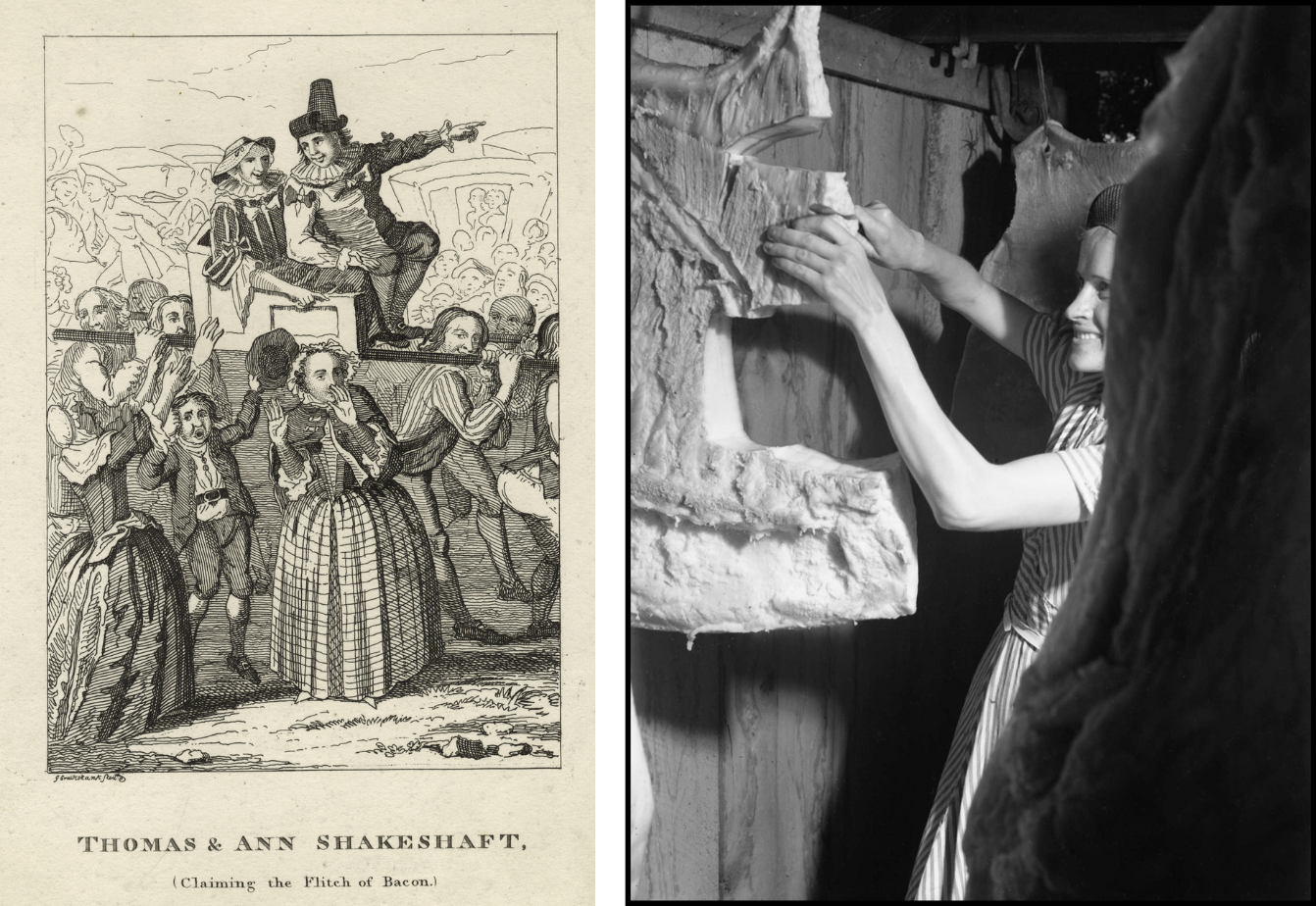
Left, a couple is paraded around town after successfully claiming their flitch of bacon in Dunmow in 1751; right, a woman slices hanging bacon off a household cut of pork in Tennessee in the 1940s. (Image credit: left, British Museum; right, University of North Texas)
This episode of Gastropod was supported by a generous grant from the Alfred P. Sloan Foundation for the Public Understanding of Science, Technology, and Economics. Check out the other books, movies, shows, podcasts, and more that they support here.